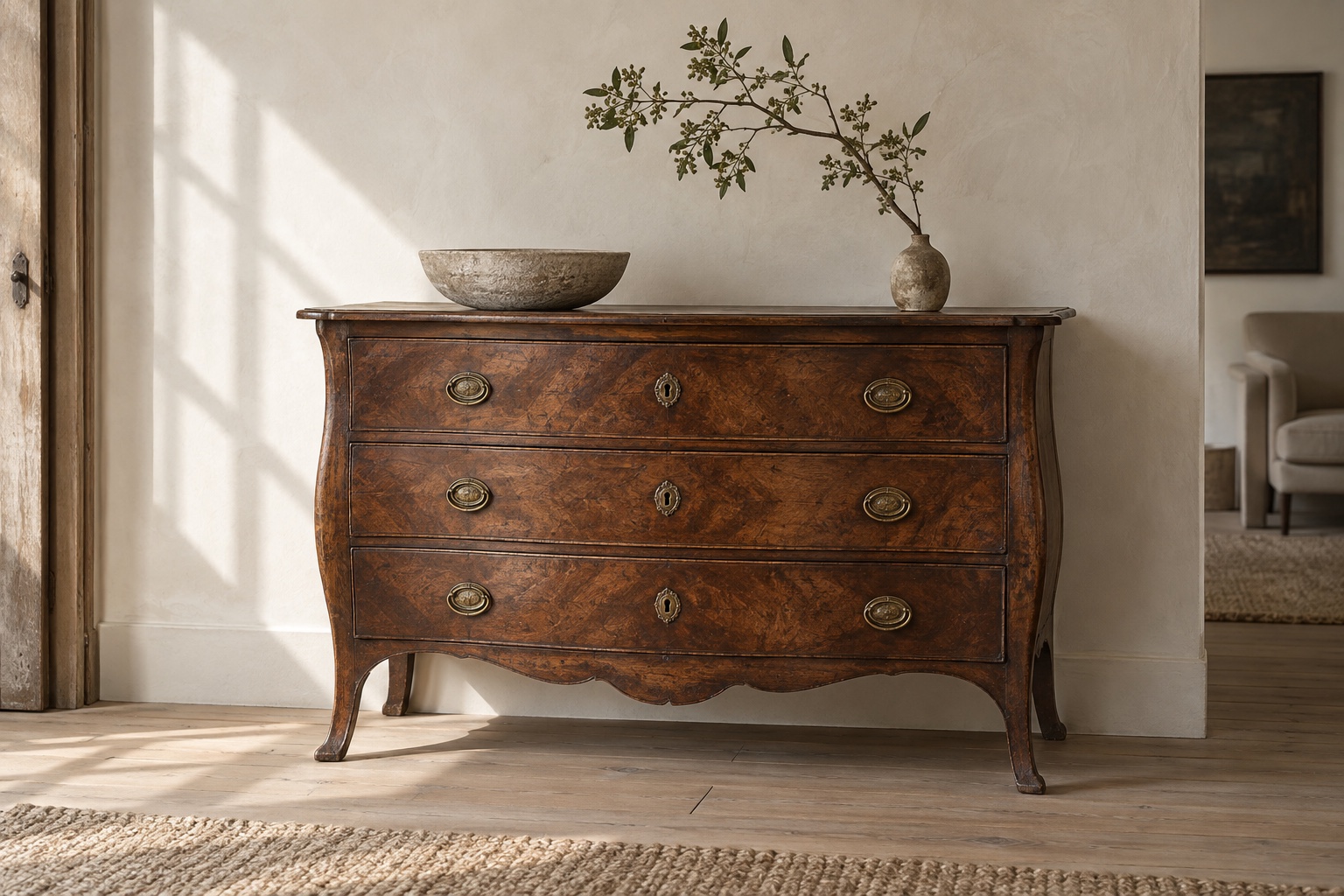

For years, dark antique furniture was treated as a problem to be painted, sold or placed apologetically in a spare room. Its return is less a trend than a correction. Against plaster and pale timber, a well-proportioned walnut chest brings depth that new furniture often has to work hard to imitate.
The attraction begins with surface. Burr, grain, fading and small repairs create a visual density that is impossible to print on.
Look for line before pedigree
A piece need not be rare to be good. Start with silhouette and scale: legs should feel related to the body, drawers should move cleanly and ornament should clarify rather than obscure the construction.
Color matters, but perfection does not. Uneven fading can be beautiful, particularly when it records the position of old handles or decades of light from the same window.
Patina is not damage. It is evidence that an object has remained useful long enough to become particular.
Make it part of the room
The easiest way to make old furniture feel relevant is to use it without ceremony. Place a commode beneath contemporary art, let a Georgian table hold a laptop or bring an old chair into the kitchen.
The goal is not period correctness. It is continuity: a room in which things from different years can share the present, each making the other look more fully itself.
Conversation